>_Signal & Noise
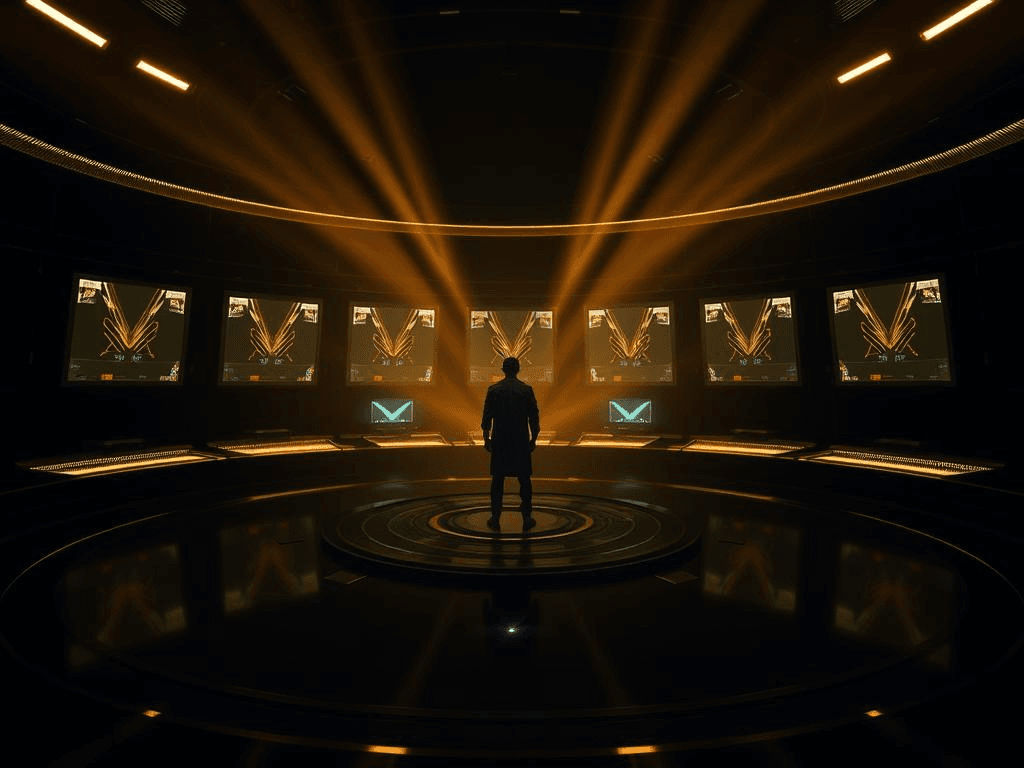
I Ran Every Department in 48 Hours
4 June 20267 min read
In a normal company, what I did on June 3rd and 4th would have required seven people. A developer to ship production code. A graphic designer to produce branded assets. A video editor to cut and render content. A content strategist to write and schedule posts. A social media manager to distribute across platforms. A sales rep to send personalized outreach. A brand consultant to build a style guide from nothing.
I did all seven. In 48 hours. Alone.
This is not a brag. This is a field report on what becomes possible when AI stops being a novelty and starts being infrastructure.
The count
Here is what actually shipped across two days — not planned, not drafted, not "in progress." Shipped. Live. Deployed. Sent.
The engineer
The Telegram notification system took under an hour. Thirty lines of TypeScript. The reason it was fast is the reason everything was fast — the infrastructure already existed.
A Telegram bot I configured weeks ago for a different project. A chat ID I already had. Environment variables I already knew how to wire into Vercel. The code was not complex. The build was not heroic. It was assembly — connecting things that were already built to a new entry point.
That pattern repeated all day. The branded Canva templates were already designed. The video rendering pipeline was already tested. The posting architecture was already encoded. I was not building from zero. I was operating a machine that previous sessions had constructed.
The designer
88 graphics in two sessions. Not because I sat there dragging shapes for eight hours. Because the template system made it mechanical.
Copy a master template. Swap the headline text. Swap the subtext. Replace the background image with a Benin bronze cultural asset generated through AI. Export. Next.
The creative decisions were made once — when the templates were designed. After that, production is execution. The same principle that lets a factory produce a thousand units after the prototype is locked. Design the system. Then run the system.
The cultural specificity matters here. Every card carries Benin bronze metalwork, nsibidi symbols, Kente-inspired geometry — visual language drawn from a specific tradition, not from a generic "tech aesthetic" library. That choice was deliberate and it was made once. Every graphic inherits it automatically.
The video editor
I do not use video editing software. I use two Python scripts.
The first one takes a JSON file — slide titles, body text, font sizes — and renders each slide as a PNG image at 1080 by 1920 pixels. Deterministic. Every pixel where it should be. No AI hallucination, no font rendering surprises.
The second one takes those PNGs and compiles them into an MP4 with crossfade transitions. Six seconds per slide, 1.5-second transitions. The formula is predictable — five slides at six seconds minus four transitions at 1.5 seconds equals 24 seconds of video.
Seven videos built this way. Each one scripted, rendered, and compiled without opening a single GUI application. The entire pipeline runs in a terminal.
This is what AI-augmented production looks like in practice. Not "AI made the video." AI helped write the scripts. A deterministic pipeline rendered them. I made every editorial decision about what to say, how to frame it, and what order to present it in. The machine handled the rendering. I handled the thinking.
The content strategist
One blog series launched — Signal and Noise. The series you are reading right now. An unfiltered build log. Everything I build gets documented. What worked, what broke, what I learned.
One blog post published — about the Telegram notification system. Full code included. A build dispatch, not a thought piece.
Then 24 posts scheduled across four platforms with a distribution system that took weeks to design. Platform-specific timing. Category interleaving — product covers rotate with course promos rotate with diagnosis cards so the feed never feels repetitive. Two-hour minimum spacing between posts on the same platform.
The scheduling itself was a session. The content was already built. The scheduling was the operation — matching each piece to the right platform, the right time, the right sequence. Logistics, not creativity.
The sales rep
This is the part that does not photograph well. No screenshots of beautiful designs. No code blocks. Just the work of finding specific businesses, researching their specific problems, and writing specific messages about what I observed.
Multiple outreach sessions across two days. Batch operations — not mass email, but targeted sends to prospects I had already researched. Each one with something only someone who had looked at their business would know.
The shift from building to selling is the hardest gear change. Building feels productive because you can see the output. Selling feels uncertain because the output depends on someone else deciding to respond. But the building means nothing if nobody knows about it.
The brand consultant
A full brand guide — built from nothing. Fonts selected, colors locked, voice defined, usage rules documented. For a project that had scattered materials and no unified system.
This is the work I do for clients. The fact that I can do it inside the same 48-hour window where I am also coding, designing, editing video, writing content, managing distribution, and running outreach — that is the point.
Not multitasking. Orchestration. Each role gets its session. Each session gets full focus. The switching cost is low because the tools are the same and the operating system — the protocols, the memory, the quality gates — carries across every mode.
What this means
Seven roles. 48 hours. One person with an AI system that has been deliberately constructed — not prompted on the fly, but engineered with memory, quality gates, voice standards, and operational protocols.
The constraint was never talent. It was never time. It was infrastructure. Build the machine. Then run it.
That is what these two days were. Not a sprint. An operation.
Continue reading
4 Jun 2026
One Session Unlocked 33 Pages Google Never Knew Existed.
I had 14 blog posts, 5 tools, and a services page. Google could see 1. The fix wasn't more content — it was one structural session.
4 Jun 2026
The Day the Machine Started Running
Yesterday I built it. Today it ran. The difference between those two days is the entire point.
2 Jun 2026
I Wired My Website to My Pocket
Someone submits their email on my site. I find out... eventually. Maybe. That gap between a person reaching out and me knowing about it? I closed it today with 30 lines of code and a Telegram bot.